
Refrigeration and HVAC for Restaurants
The cold side and the air — on one phone number.
Book a Service Call (678) 778-6648
- 20 yearsOwner’s time in the trade
- Snellville, GAGwinnett County and nearby
- Refrigeration & HVACPlus HVAC
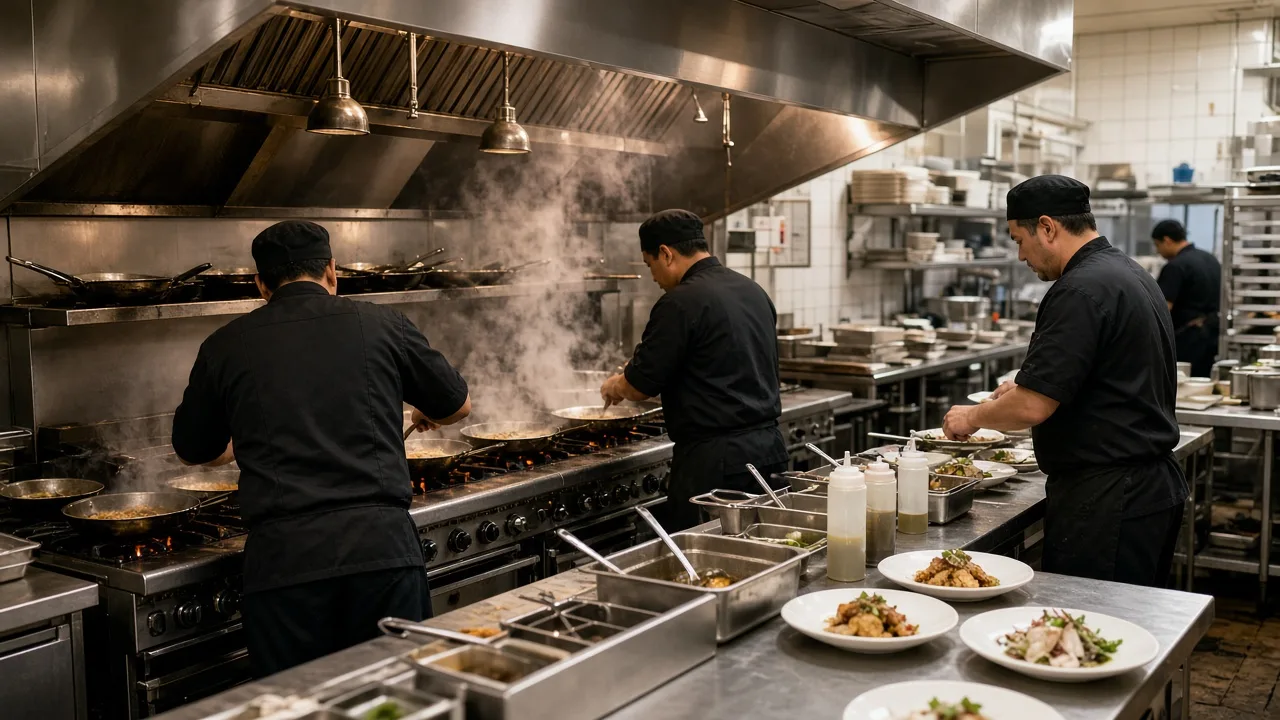
Your kitchen runs on systems that fail in each other’s direction: refrigeration and ventilation. A hood pulling against unbalanced make-up air drags conditioned air out of the dining room; a condenser fouled by that same grease-laden air stops holding 41°F. Covering both means one visit can close out a fault that crosses them, instead of two contractors each diagnosing their own piece and neither owning the overlap.
What we keep running in a restaurant
-
Cold side
Walk-in coolers and freezers, reach-ins, prep tables, display cases, ice machines and the condensing units behind them.
-
Air
Rooftop units, split systems, kitchen exhaust and the make-up air that has to balance the hood.
What usually goes wrong
These are the ones that stop your service rather than merely annoy you. Most have been building for weeks by the time anyone picks up the phone.
- A walk-in that holds overnight but climbs above 41°F once the doors start opening
- A dining room that will not hold setpoint through a dinner rush
- Ice production falling off in the middle of summer, exactly when the bar needs it most
- A hood that is pulling conditioned air out of the dining room because make-up air is out of balance
- An electricity bill climbing with no change to covers, hours or menu
Restaurants and foodservice operations depend on refrigeration and HVAC working together. When either fails, the kitchen or dining room feels it. When both are managed by one vendor, the operator has one number to call and one technician who knows how the systems interact.
Refrigeration: the walk-in, the ice and the line
Walk-in coolers, walk-in freezers, ice machines, reach-in coolers, and prep tables are the backbone of a restaurant kitchen. When a walk-in cooler goes down, product starts spoiling within hours. When an ice machine stops producing, the bar and the kitchen both back up. Pierre Refrigeration Services diagnoses and repairs commercial refrigeration equipment for restaurants across metro Atlanta.
HVAC: a kitchen runs hotter than anything else
A restaurant kitchen runs hot. Between the cooking line, the dish machine, and the refrigeration load, the HVAC system works harder in a restaurant than in almost any other commercial setting. When the dining room cannot cool down or the kitchen exhaust hood is not clearing, the problem is not just comfort — it is staff safety and whether the coolers can keep up.
Why one vendor for cold and air
Most foodservice operators juggle separate companies for refrigeration and HVAC. That means two service agreements, two phone numbers, and two technicians who each know only one part of the building. Pierre Refrigeration Services covers both — so when a walk-in cooler goes down and the kitchen hood needs service in the same visit, one call handles both.
If your restaurant needs refrigeration or HVAC service, book a service call. One technician can diagnose the issue and get your kitchen back to running.
Questions operators ask
- Can you really cover all of it, or do you subcontract half?
- Refrigeration and HVAC are both handled directly — the cold boxes and the air that keep the building running. Kitchen plumbing and cooking equipment are outside scope.
- What will it cost to come out and look?
- You will get the findings and your options before any work starts. What drives the cost is which component failed, whether the part is on the shelf and how accessible the unit is — none of which is knowable until someone has measured it.
- Should I repair this or replace it?
- That depends on what failed, not on how old the unit is. A fan motor, a contactor or a door gasket is routine; a failed sealed system on an old box often is not. You get a straight answer after diagnosis, not a replacement quote as the only option on the table.
- Do you do scheduled maintenance, or only breakdowns?
- Both, and the scheduled work is what keeps you off the breakdown list. A condenser coil wants cleaning at least twice a year, and in grease-laden kitchen air that interval is a floor rather than a maximum.
Equipment measured first, then repaired or replaced
A walk-in that will not hold on a Friday is usually a coil, a fan motor, a gasket or a defrost fault long before it is a dead compressor, and those are very different bills. Measuring it tells you which one you have: a repair if the unit has life in it, a replacement if it does not.
When a cooler, case or rooftop unit is at the end of its life, the same measurements size what replaces it.
Why one vendor matters here
Most kitchens your size carry a refrigeration contractor and an HVAC contractor. Each one diagnoses their own equipment and neither owns the overlap, which is where the expensive faults live. One vendor for cold and air means the person looking at your cooler can also tell you your make-up air is the reason it is struggling.
Get someone out to look at it
Book online with a preferred date, or call and talk it through. Tell us the equipment, what it is doing, and how long it has been like that.
Book online