
Commercial Ice Machine Maintenance: Scale, Sanitation, and Falling Output
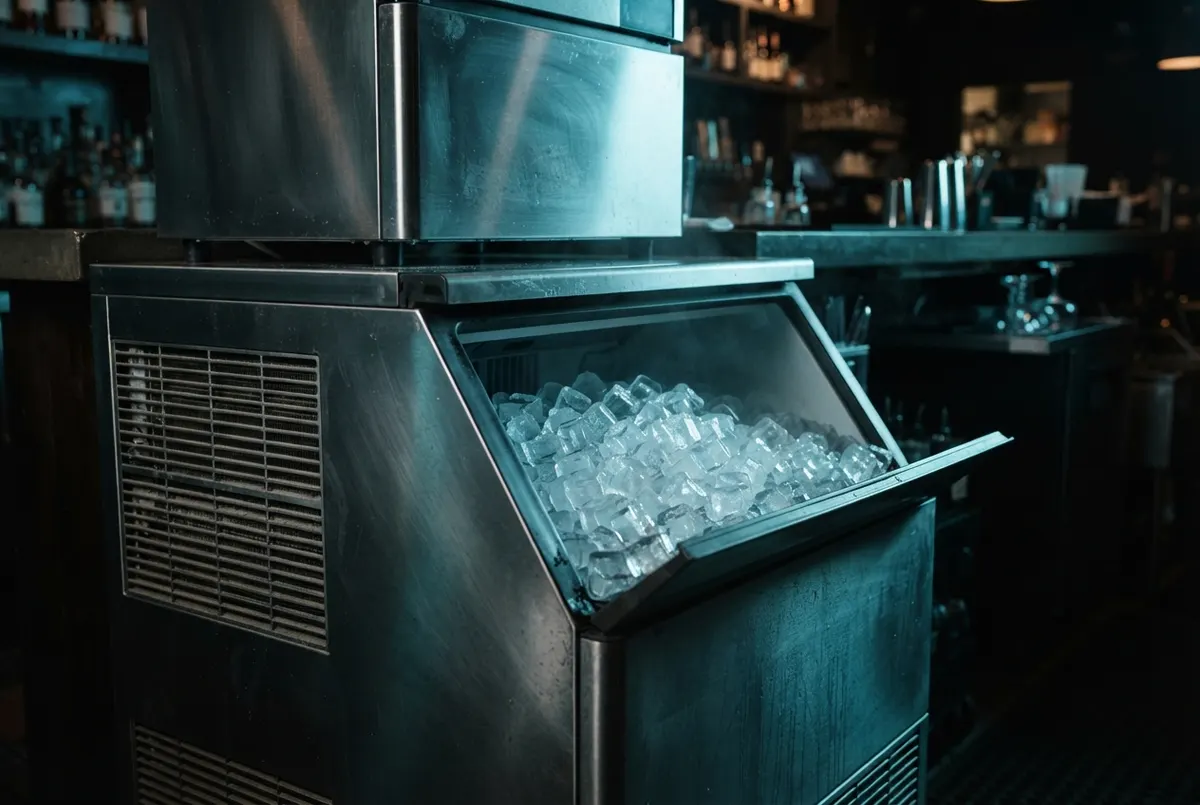
A commercial ice machine loses output gradually, not all at once. Scale on the evaporator, a dirty condenser, and poor water quality cut production and shorten the machine’s life long before it stops making ice. Cleaning on a schedule is what keeps capacity where the kitchen needs it.
An ice machine rarely fails without warning. It gets quietly worse for weeks — smaller batches, softer cubes, longer cycles — and then runs out during a service on the hottest day of the year. Almost all of that is preventable, and most of it is water chemistry rather than mechanical failure.
Symptoms that output is dropping
- Bins that used to fill overnight no longer do
- Cubes come out cloudy, soft, small, or hollow
- Harvest cycles take noticeably longer than they used to
- Cubes clump together in the bin instead of staying loose
- The machine runs almost continuously without keeping up
- A sour or musty smell at the bin, or visible slime on interior surfaces
Possible causes
Falling output usually has one of a handful of causes, and they compound. A machine with scale and a dirty condenser is fighting on two fronts at once.
- Scale on the evaporator — dissolved minerals in the water plate out as ice forms, insulating the surface so each batch takes longer and releases poorly
- A dirty or blocked condenser — on an air-cooled machine, a coil packed with kitchen grease and dust cannot reject heat, so the machine loses capacity exactly when the room is hottest
- Biofilm in the water path — slime in the trough, distributor and bin affects taste, smell and food safety, and it is the reason a machine can look clean and still produce bad ice
- Water quality and filtration — an exhausted filter or hard supply water accelerates every problem above
- Ambient conditions — a machine tucked under a hot line, against a wall, or next to a fryer is pulling in air that is already too warm
- Low refrigerant charge or a failing component — less common, but this is what remains once the cleanable causes are ruled out
What you can check before calling
- When the machine was last cleaned and sanitised — if nobody can say, that is the answer
- When the water filter was last changed, and whether it has a date on it
- Whether the condenser coil is visibly dirty, and whether anything is blocking airflow around the machine
- Whether the room around the machine has got hotter — new equipment nearby, a failing exhaust fan, a propped door
- Whether the ice itself changed before the volume did — taste and clarity usually shift first
When service is appropriate
Cleaning is routine and can be scheduled. Some symptoms are not cleaning problems and should be looked at rather than deferred.
- Output is still short after a full clean and a fresh filter
- The machine cycles but produces little or no ice
- Ice tastes or smells wrong after sanitising — that points at the water path, not the bin
- Water is pooling under or around the machine
- The machine trips a breaker, or runs without ever completing a harvest
Most kitchens land on a cleaning interval somewhere between quarterly and twice a year. Water hardness, how hot the room runs, and how hard the machine is worked decide where in that range a particular site sits — which is why the manufacturer interval is a starting point, not an answer.
How a technician diagnoses it
The point of the visit is to separate a cleaning problem from a mechanical one before anyone spends money on parts.
- Measure actual production against the machine’s rated capacity at the current ambient and water temperature — rated output assumes conditions most kitchens do not have
- Inspect the evaporator for scale and the water path for biofilm
- Check condenser condition and the air path around the machine
- Time the freeze and harvest cycles and compare them against spec
- Check incoming water quality and filter condition
- Only then look at refrigerant charge and electrical components — because a scaled machine with a blocked condenser will read as underperforming no matter what the charge is
Who you’re asking
This is written from the work Pierre Refrigeration Services does every week in commercial kitchens across Metro Atlanta. Owner Don Pierre has spent 20 years in commercial refrigeration and HVAC and established the business in 2014. Refrigeration and HVAC are handled by the same company, which is why these guides treat a fault as a building problem rather than one trade’s problem.
Related questions
- How often does an ice machine really need cleaning?
- Interior cleaning and sanitising every three to six months, water filters about every six, and the condenser monthly in a kitchen. Slime or an off taste means it is overdue now rather than at the next interval.
- Why is the ice cloudy, soft or hollow?
- Those are water-side symptoms rather than cooling ones. Thin or hollow cubes point at restricted water reaching the plate; soft or fast-melting ice often points at scale insulating the evaporator so the harvest cycle runs early.
- Does a water filter actually change anything?
- It changes how fast scale builds on the evaporator plate, and scale is what eventually stops ice releasing cleanly. A filter is cheap relative to a descale, and far cheaper than a plate.
- Why does production fall every summer?
- Machines are rated at a given ambient and water temperature, and both move in summer. A machine with a dirty condenser or tight clearance has no headroom left when the room warms up.
Need service?
Book online or call to schedule.
Book online