
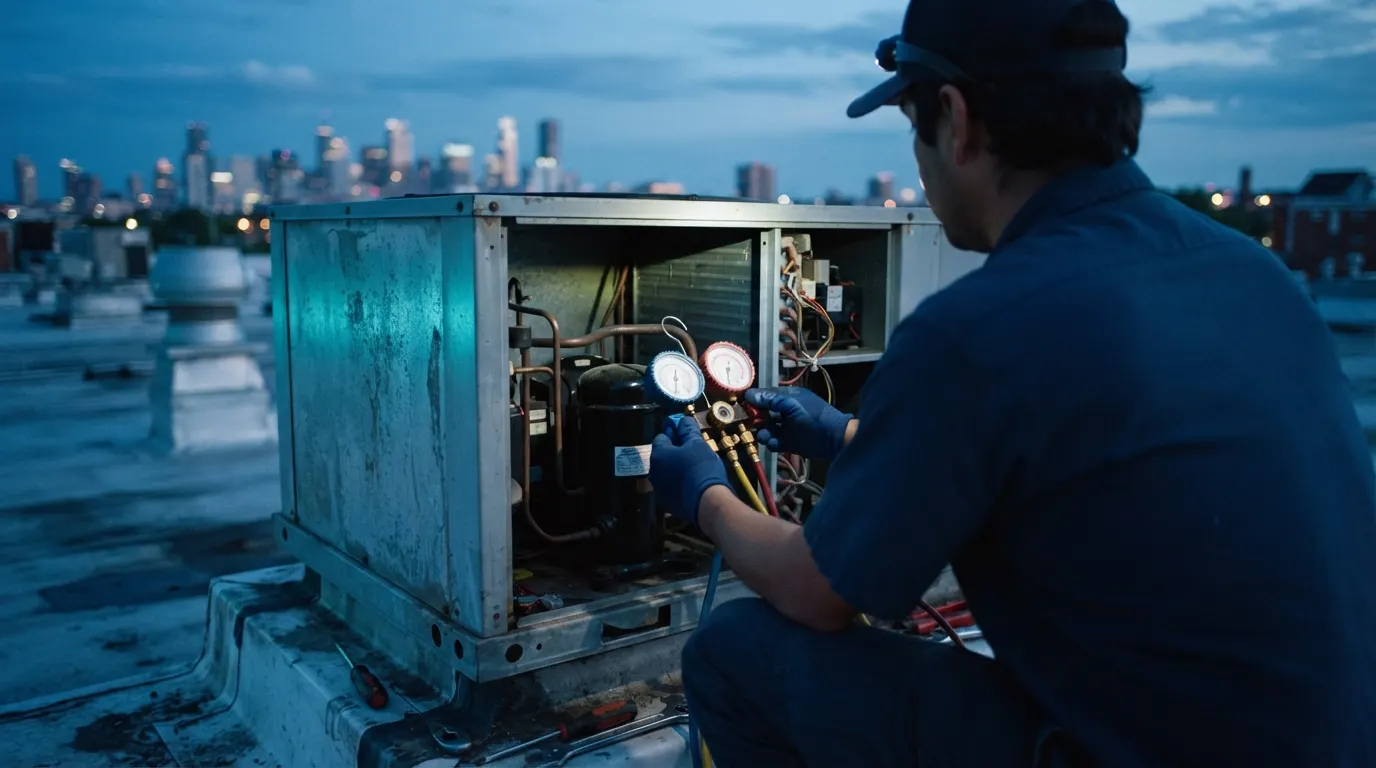
Commercial refrigeration and HVAC guides — know it before it fails
What to check, how often, and when your problem stops being a maintenance job.
These guides come from diagnosing the same faults over and over: how often your condenser coils actually need cleaning in grease-laden kitchen air, why a walk-in holds overnight but drifts during your dinner service, and when a unit is genuinely past repairing. Each one tells you what you can check yourself, and where the line sits between maintenance and a service call.
Where to start
If something is failing right now, the fault guides will get you there faster. If you are trying to stop it happening again, or working out whether a unit is worth another repair, you are in the right place.
Running costs and efficiency
- Why a Failing Refrigeration System Shows Up on Your Power Bill First
Commercial refrigeration usually degrades long before it breaks, and the first place that shows is the electricity bill. A unit losing efficiency runs longer to hold the same temperature. Reading that as an early warning turns an emergency repair into a scheduled one.
Ice machines
- Commercial Ice Machine Maintenance: Scale, Sanitation, and Falling Output
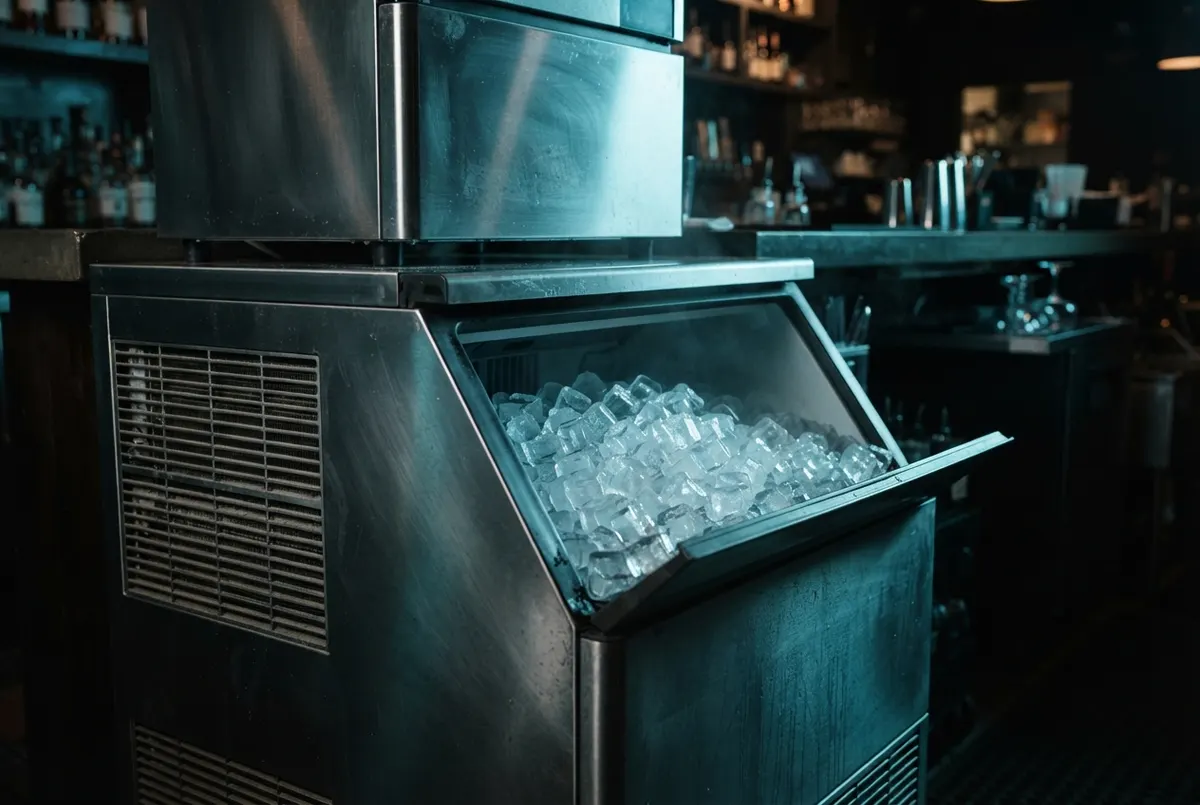
A commercial ice machine loses output gradually, not all at once. Scale on the evaporator, a dirty condenser, and poor water quality cut production and shorten the machine’s life long before it stops making ice. Cleaning on a schedule is what keeps capacity where the kitchen needs it.
Keeping commercial HVAC alive longer
- Commercial Rooftop Unit Maintenance for Restaurants
Restaurant rooftop units fail faster than office units because they run longer hours in grease-laden air. Filter changes, coil cleaning, belt and drain checks, and catching short-cycling early prevent most mid-service cooling failures. This is a maintenance guide, not a diagnosis of a unit that has already stopped cooling.
- Why Your Commercial Kitchen Is Too Hot (And Why It Is Usually Not the AC)
A commercial kitchen that stays hot while the air conditioning runs usually has a make-up air problem, not a cooling problem. Exhaust hoods pull enormous volumes of air out of the building, and when that air is not replaced correctly the kitchen stays hot and the hood stops working properly.
Repair, replace, or buy new
- Repair or Replace? When to Buy New Commercial Refrigeration Equipment
The decision to repair or replace commercial refrigeration equipment comes down to age, repair cost vs. replacement cost, energy efficiency, and frequency of breakdowns. A general rule: if a single repair costs more than half the price of a new unit, replacement is the better investment.
When equipment fails mid-service
- What to Do When Restaurant Equipment Fails During Service
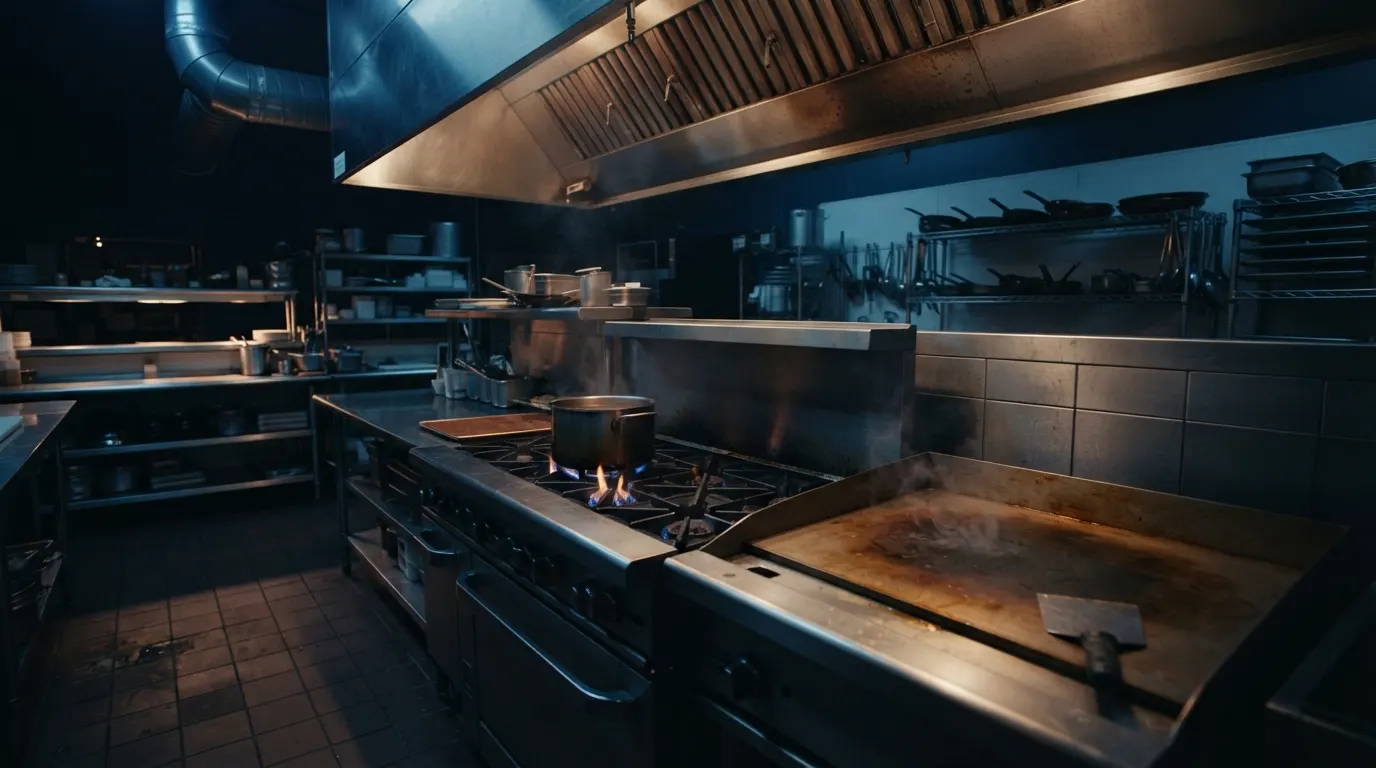
When restaurant equipment fails during a busy service, the first steps are to protect product, switch to backup, and document the issue — then call a technician. A clear emergency response plan reduces product loss and gets the kitchen back to running faster.
Refrigeration and food safety
- Commercial Refrigeration Preventive Maintenance Checklist
Preventive maintenance for commercial refrigeration means regular condenser cleaning, gasket checks, defrost cycle verification, and temperature logging. A simple checklist prevents most walk-in cooler, freezer, and ice machine breakdowns before they cost you product.